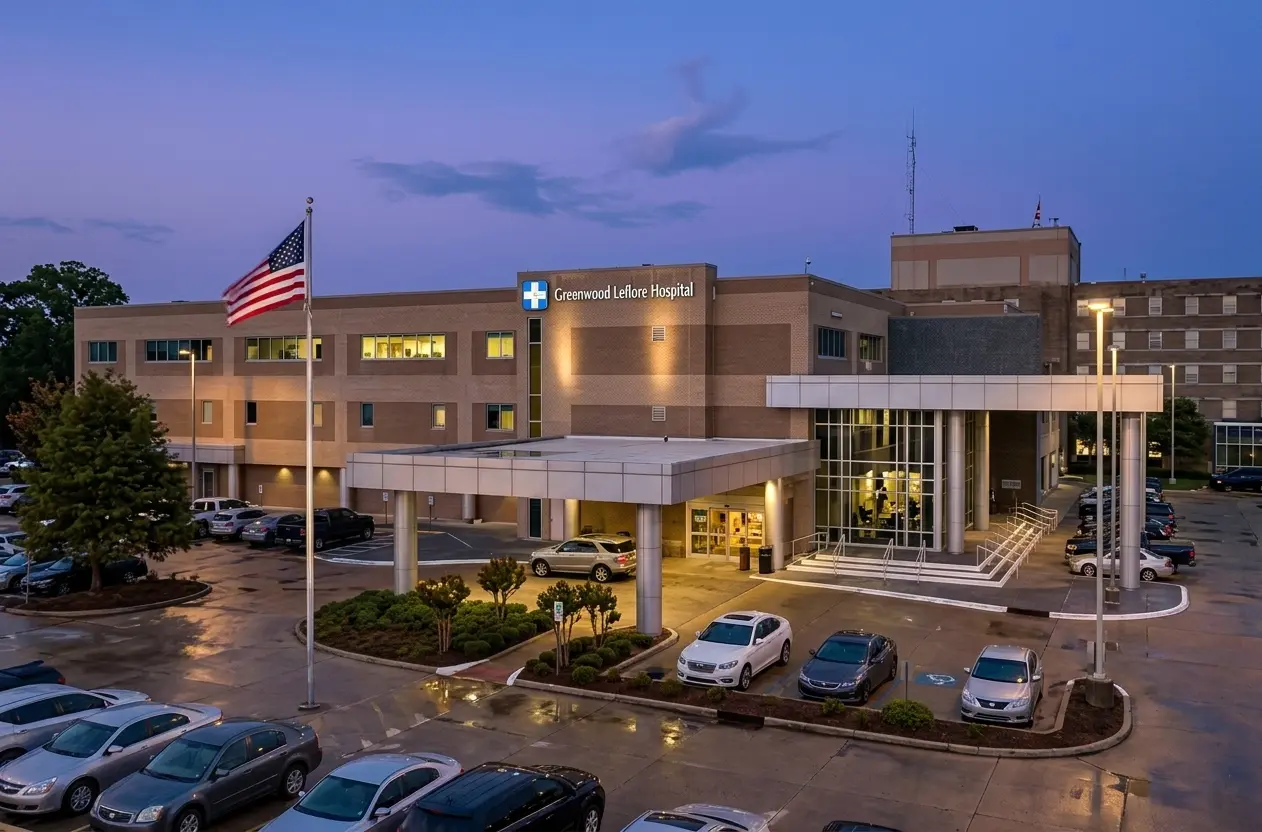
On the morning of April 13, 2026, department heads at Greenwood Leflore Hospital gathered to hear what many of them had suspected for months. Administrators told them the hospital would close permanently on June 15 if ongoing negotiations with the University of Mississippi Medical Center failed to produce a deal. By federal law, all 425 employees received written notice the same day. The closure, the letter said, was expected to be permanent.
Within hours, the story was circulating across Mississippi. By the next morning it had spread nationally, framed in most coverage as a story about Medicaid overpayments, rural hospital funding, and the consequences of Mississippi's long refusal to expand Medicaid under the Affordable Care Act. Those frames are not wrong. But they are incomplete — and in their incompleteness they suggest a problem that policy might plausibly fix, when the evidence points to something far more durable and far less amenable to intervention.
This is the story that most coverage has not told. It is a story that begins not in 2026, not in 2022, and not even in 2020 when COVID-19 drained the hospital's cash reserves. It begins in 1930, in the fields of the Mississippi Delta, and it has been moving in one direction ever since.
The Medicaid Story Is Real — But It Is Not the Root
The immediate trigger for the June 15 warning is a dispute with the Mississippi Division of Medicaid over $7.5 million in overpayments made through the Mississippi Hospital Access Program between 2024 and 2025. The Division determined that because GLH had closed its labor and delivery unit and intensive care unit in 2022, the patient volume data used to calculate its MHAP payments was no longer accurate. The hospital had been receiving money it had not, strictly speaking, earned under the program's formula.
This is worth understanding precisely. MHAP was designed to supplement the chronically low Medicaid reimbursement rates that rural hospitals receive — rates so far below actual costs that operating a hospital in a poor rural county is structurally unprofitable under almost any scenario. After the federal government approved a revision to the program in 2023, GLH received approximately $25 million before the clawbacks began. A Hinds County Chancery Court judge has since paused the repayment collections while the hospital seeks alternatives. The Mississippi Division of Medicaid has $2.5 million already recovered, with another $5 million at risk.
Read the coverage of this dispute and you will encounter a familiar policy argument: if Mississippi had expanded Medicaid under the ACA, rural hospitals would be receiving more baseline reimbursement and this kind of crisis might have been averted. That argument has merit on its own terms. But it obscures what the numbers actually show when examined over time.
A Decade of Rescue Attempts — The Funds That Could Not Save GLH
Over the past three years alone, Greenwood Leflore Hospital received or was extended more than $44 million in public funds, credit lines, grants, and supplemental payments. Its 2024 audit briefly showed a deficit reduced from $16.2 million to just over $1 million — a moment that looked like progress. One year later, the 2025 audit reflected a $13 million deterioration, driven by the Medicaid recoupment and continued declining patient volume. The hospital had not been rescued. It had been kept alive just long enough to need rescuing again.
This is not a pattern that suggests a fixable funding problem. It is a pattern that suggests a structural mismatch between the institution and the community it serves — a mismatch that money can delay but cannot resolve.
What the Population Data Shows — and Why It Matters More Than Medicaid
Greenwood Leflore Hospital was built for a Leflore County that no longer exists. Understanding why requires going back to the county's peak.
Leflore County, Mississippi — Population 1930–2025
Sources: U.S. Census Bureau; Mississippi Encyclopedia; Mississippi Demographics (2025 projection). Annual rate of decline: −1.1%.
In 1930, Leflore County was the fourth most populous county in Mississippi, home to 53,506 residents — nearly 77 percent of them Black, working as tenant farmers and sharecroppers in one of the most densely farmed cotton-producing regions in the United States. The county had the highest percentage of tenant-operated farms in the entire state. Cotton was not simply an agricultural product here. It was the entire economic architecture of Leflore County, and it required enormous quantities of human labor.
Then the machines arrived. Agricultural mechanization through the 1930s, 1940s, and 1950s systematically eliminated the economic rationale for that labor. What had required thousands of workers could be accomplished by a handful of operators with modern equipment. The first wave of departure — what historians call the Great Migration — pulled hundreds of thousands of Black Mississippians northward to Chicago, Detroit, and Cleveland, drawn by industrial jobs and pushed by a combination of economic displacement and the sustained racial violence that characterized Leflore County's history. The county recorded 48 documented lynchings of Black residents between 1877 and 1950 — the highest number in Mississippi, the third highest in the United States.
By 2020 the population had fallen to 28,339. Today, current projections put it at approximately 25,800 — less than half the 1930 peak — and the annual rate of decline is accelerating, not slowing. Between 2024 and 2025 alone, the county lost more than 400 residents. Local residents interviewed by Delta News cited housing, education quality, crime, and the absence of employment as the primary reasons families continue to leave.
A hospital built to serve 53,000 people does not simply scale down to serve 25,000. It has fixed infrastructure costs — buildings, equipment, compliance requirements, specialist staffing — that do not shrink proportionally when patient volume falls. GLH suspended the use of 173 beds in 2023 to control costs. It has closed its labor and delivery unit, its intensive care unit, its neurosurgery services, its inpatient dialysis, its urology services, its after-hours clinic, its wellness center, its outpatient rehabilitation center, and its cardiac rehabilitation center. Each closure reduced costs but also reduced the hospital's ability to generate revenue — a downward spiral in which every service cut makes the remaining services less viable.
The UMMC Negotiations: What "Hopeful" Actually Means
The hospital's official communications describe the UMMC negotiations as further along than they have ever been. That is technically true. It is also the third time since 2018 that GLH and UMMC have entered serious discussions about a transfer. The previous two attempts ended without a deal. In 2022, UMMC withdrew 72 hours before it was scheduled to sign a lease agreement.
Three Attempts, One Outcome: The UMMC Negotiation History
The terms of the current letter of intent, signed on UMMC stationery on February 11, 2026, are remarkable for what they reveal about Greenwood Leflore Hospital's negotiating position. GLH is offering to donate — not sell, not lease, but give — all of its land, buildings, clinical facilities, physician practices, and operations to UMMC or one of its affiliates. In return, GLH asks for nothing specific. The letter states only that the arrangement aims to "ensure financially viable healthcare services are available to the community." What those services might consist of is left entirely open.
UMMC's spokesperson has declined to answer questions about how a potential acquisition would affect services or the hospital's financial outlook. State Senator Hob Bryan, who has been involved in the discussions, said only that the result "may not return to its previous size." That is the entirety of what the public knows about UMMC's intentions for Greenwood after a transfer.
This ambiguity is not accidental. UMMC is a state institution that must answer to the Mississippi Legislature and the University of Mississippi system. It recently acquired Merit Health Madison, a 67-bed facility in Canton. Its expansion strategy appears focused on building a regional network — not on sustaining full-service hospitals in communities where the economics do not support them. The silence about post-transfer services is almost certainly a reflection of internal uncertainty about whether even a scaled-down presence in Greenwood is financially justifiable.
This produces a situation that deserves more attention than it has received: a financially distressed hospital is offering its entire physical plant to a larger institution for free, and that larger institution is still moving slowly, still not committing to specific services, still apparently doing the arithmetic on whether accepting the gift is worth the ongoing operating liability. When a hospital offered at no cost cannot attract a taker willing to make basic commitments about continuity of care, the market has delivered a verdict about that hospital's viability that no amount of additional public funding is likely to reverse.
The Agriculture Trap: Why the Land Cannot Save the Town
One of the persistent puzzles about Leflore County is the apparent contradiction between the depth of its poverty and the quality of its land. The Mississippi Delta sits on one of the most productive agricultural plains in North America — deep alluvial soils deposited over millennia, more than 200 frost-free days per year, and abundant groundwater. If agricultural wealth were distributed to the people living on this land, Leflore County would not be the county with the highest rate of child poverty in the United States. It would be thriving.
The reason it is not begins with land ownership. Most of the farmable land in Leflore County — as in the broader Delta — was concentrated in the hands of a small number of white families during the plantation era and has been passed down or accumulated through acquisition ever since. Black residents, who constitute approximately 74 percent of the county's current population, own a fraction of the county's agricultural land. Federal crop subsidies, which are distributed based on farm size and production volume, have overwhelmingly flowed to the large commercial operations: between 2001 and 2005, roughly 95 percent of the nearly $1.2 billion in agricultural subsidies directed at the Delta region went to large commercial farms, virtually all with white owners. As John Greer Jr., former director of the Mid-Delta Empowerment Zone, put it plainly: "The problem with agriculture is that it's not a wealth builder for the people who live here. It's a wealth builder for the few who own the property and the resources."
Contemporary investment in the region follows the same pattern. Delta Grain, a Leflore County grain elevator company, announced a $3.76 million expansion in late 2025, adding storage capacity and roughly 20 jobs. The investment is real and welcome. It is also a reminder of what agricultural modernization actually produces in the Delta: more efficient processing of commodity crops — corn, soybeans, rice — that are grown by large mechanized operations, processed locally, and shipped to national or international markets. The profits leave the county. The community that surrounds the elevator remains exactly as it was.
The idea that Leflore County might attract the kind of large-scale technology investment that is currently reshaping other parts of Mississippi confronts a similar set of structural barriers. Amazon Web Services has committed $10 billion to Madison County near Jackson. Compass Datacenters has committed $10 billion to Lauderdale County in east Mississippi. Elon Musk's xAI has announced a $20 billion investment in DeSoto County near Memphis. Each of these projects was built on the same foundation: proximity to major interstate highways, existing high-capacity fiber optic infrastructure, abundant and reliable electrical power, and access to a qualified technical workforce. Leflore County, positioned in the geographic center of the Delta, offers none of these at the scale that hyperscale data center operators require. The "Digital Delta" that Governor Reeves has been promoting is being built at the Delta's edges — not in its heart.
The Question Nobody Is Asking Out Loud
The coverage of Greenwood Leflore Hospital's potential closure has been thoughtful and thorough on the immediate facts. It has been considerably less direct about the central question that the immediate facts raise: is there a realistic scenario in which a full-service hospital remains economically viable in Greenwood, Mississippi, over the next decade?
The evidence assembled here suggests the answer is no — and that this has been the answer for longer than anyone in an official capacity has been willing to say clearly. A county whose population has fallen from 53,000 to 25,000 over ninety years and is declining at 1.1 percent annually does not have the patient base to support the operating costs of a full-service acute care hospital. This is true regardless of Medicaid expansion. It is true regardless of what UMMC decides. It is true regardless of how the overpayment dispute is resolved. The demographic trajectory that makes GLH unsustainable was set in motion before most of the hospital's current employees were born.
⚠ What a Realistic Transition Might Look Like
The appropriate comparison is not "full-service hospital vs. nothing." A more honest framing asks what level of healthcare infrastructure is actually sustainable for a community of 25,000 people with a declining population and a median household income of $35,277. Several models exist that the current coverage has largely ignored:
- Rural Emergency Hospital (REH): A federal designation created in 2023 specifically for communities like Greenwood. REHs provide emergency and outpatient services without inpatient beds, receiving enhanced Medicare reimbursement in exchange. They are designed for exactly this situation — communities that cannot sustain a full hospital but need more than a clinic.
- Federally Qualified Health Center (FQHC): A community health center model that receives enhanced federal funding and is specifically designed for underserved populations. FQHCs do not replace emergency care but dramatically expand access to primary and preventive services.
- UMMC satellite campus: The UMMC campus in Grenada — currently the nearest hospital at 33 miles — is already part of the UMMC network. A coordinated transport and telemedicine arrangement, combined with a local urgent care presence in Greenwood, might deliver more reliable care than a financially distressed full-service hospital that is perpetually on the verge of closure.
None of these alternatives are being discussed prominently in the current coverage of GLH. The conversation has been almost entirely about whether the full hospital can be saved — not about what the right-sized institution for this community actually looks like.
Michael Stewart's Twenty Years
It is important not to lose the human dimension of this story in the structural analysis. Michael Stewart worked as an occupational therapy assistant at Greenwood Leflore Hospital for twenty years. On April 8, 2026, hospital administrators called him and his colleagues at the Outpatient Rehabilitation Center to a meeting midway through his ten-hour shift and informed them their jobs were being cut.

Michael Stewart, laid off from Greenwood Leflore Hospital after 20 years. Photo: Jaylin R. Smith / Mississippi Free Press
Stewart told the Mississippi Free Press that he understood the layoffs were part of an effort to shore up the hospital's finances. He did not dispute the logic. What he objected to was the manner: no warning, no transition period, an abrupt end to two decades of work during a shift he had been doing since 7 a.m. He also raised a concern that the structural analysis above tends to obscure: his former patients. Some of them had insurance accepted only at GLH's outpatient rehab center. Others would need to travel to Cleveland, Grenada, or Indianola for services that had been available in their own city. For people without reliable transportation in a county where 81 percent of workers drive alone and public transit is essentially nonexistent, those thirty or forty extra miles are not an inconvenience. They are a barrier that will go uncleared.
Canary Parker, a Leflore County resident who recovered from a broken ankle at GLH's outpatient rehabilitation center last year, put it simply: "Not that many people in the area can go further to other places. This is one main connection for a lot of people, and now they have to go further. That's sad to think about."
Parker is right. And that reality does not change based on whether the hospital's closure was inevitable. Inevitable closures still hurt people. The question is whether the pain is managed with planning and alternatives, or whether it is allowed to arrive all at once on June 15 with nothing ready to replace what is lost.
The Verdict the Market Has Already Delivered
The coverage of Greenwood Leflore Hospital has framed the UMMC negotiations as the central drama — will the deal happen, will it be enough, will the legislature act in time? That framing is understandable. It is the most immediately urgent element of the story, and it has a date attached to it.
But the deeper drama is one that has already been decided. UMMC — the state's largest and best-resourced public health system, a state institution with an explicit mission to serve all Mississippians — is being offered a century-old hospital, fully equipped, at no cost. It has been negotiating that gift for months. It still has not committed to specific services. It still has not said clearly what Greenwood would have after a transfer that it does not already have. That hesitation, from an institution with no financial reason to hesitate on price, tells you everything about the underlying viability calculation.
When even a free hospital is an unattractive proposition, the question is no longer whether Greenwood Leflore Hospital can be saved in its current form. It cannot. The question is what replaces it — and whether Mississippi, which has a long habit of allowing crises in the Delta to arrive unmanaged and depart unresolved, will approach the transition with the planning it requires or simply wait for June 15 to pass and call the closure somebody else's problem.
Thirteen thousand people, the majority of them Black, live more than thirty miles from the nearest hospital. That number will not shrink if the building on River Road goes dark. It will simply be a community with no hospital at all — which is, for a county whose population has spent ninety years telling its own story through the act of leaving, one more reason to go.