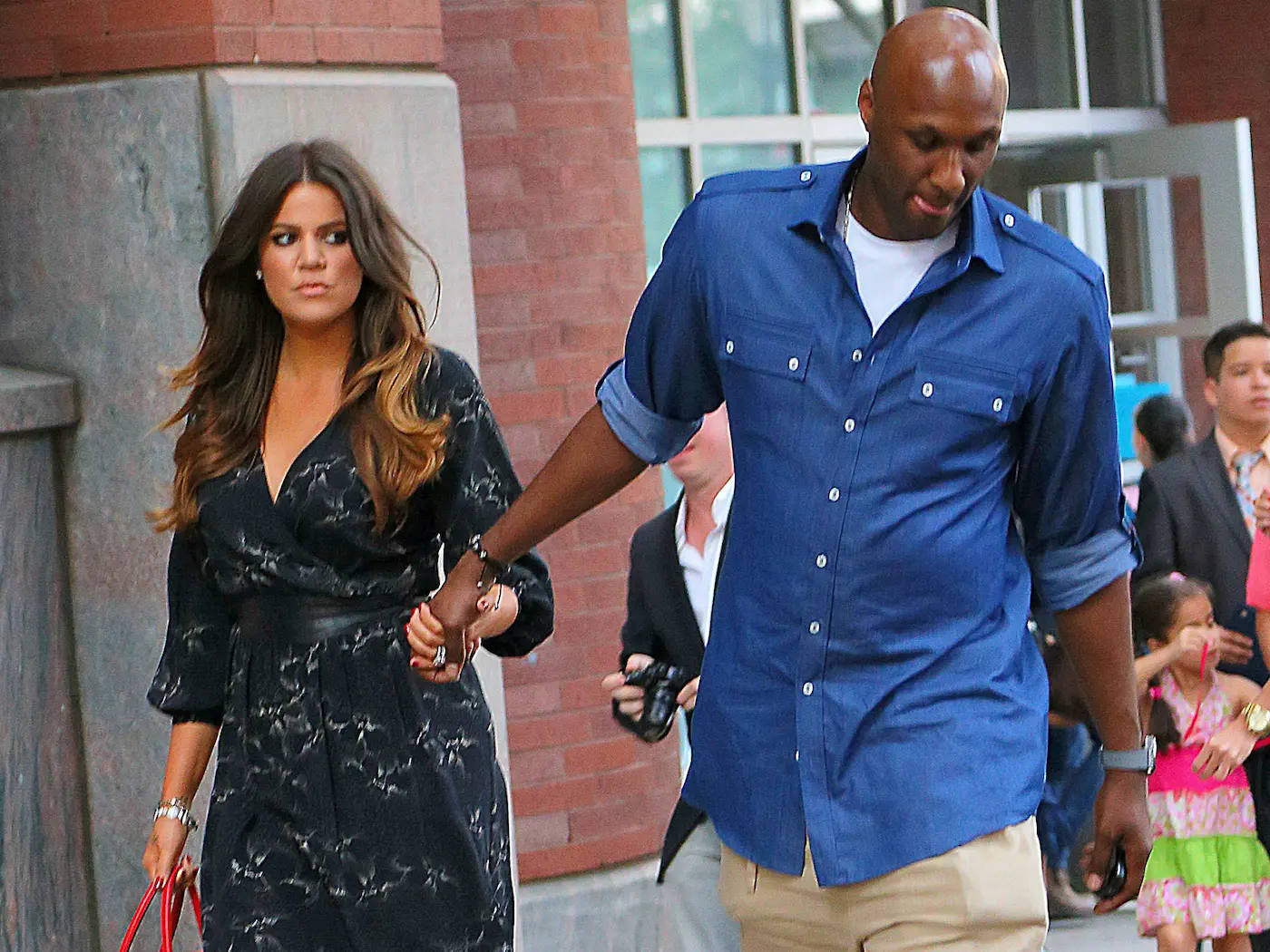
Netflix released Untold: The Death & Life of Lamar Odom on March 31, 2026, and within days it was trending across Mississippi and much of the country. The film is, by any honest measure, gripping television. It features a broken man speaking with uncommon candor about addiction, loss, and survival. It features Khloé Kardashian delivering two hours of raw, unfiltered testimony that reportedly forced the director to rebuild the entire documentary from scratch. It features a brothel manager recounting a night that nearly ended a man's life. It is the kind of content that earns tens of millions of views before anyone stops to ask the obvious question: how much of this can actually be verified?
The answer, after careful review, is: very little of what matters most. And on the two most explosive accusations in the film — one involving a dead father and one involving a dead brothel owner — the answer is essentially none of it.
This is our analysis. It is opinion. But we believe it is opinion the documentary earned.
The Structure of the Story — and Who Controls It
Before examining the specific claims, it is worth understanding who built this film and how. Untold: The Death & Life of Lamar Odom was directed by Ryan Duffy and produced by Propagate and Stardust Frames Productions. Among its executive producers is Jeff Jenkins — a name that will be familiar to anyone who has followed the Kardashian media empire. Jenkins spent years as the producing architect of Keeping Up with the Kardashians. He knows how to make this family look good. It is what he does professionally.
The documentary's central narrative engine is Khloé Kardashian's testimony. The director has publicly stated that Khloé agreed to participate at the last moment, sitting for a two-hour interview that was so consequential it forced a complete reconstruction of the film. In other words: without Khloé, there is no documentary in its current form. With Khloé, the documentary becomes, in large part, Khloé's version of events — told through a production team that has spent years serving the Kardashian brand.
We are not suggesting this was a conspiracy. We are observing that the documentary's most dramatic claims flow from a single, deeply interested source, filtered through a production apparatus with a documented relationship to that source. That is not a foundation for unverified accusations. It is a foundation for very compelling television.
The $100, the Nikes, and the Man Who Cannot Respond
The film's most dramatically satisfying villain — after Dennis Hof, whom we will address shortly — is Joe Odom, Lamar's father. According to Khloé's testimony, Joe arrived at Sunrise Hospital in Las Vegas in the days after Lamar's overdose and immediately pushed for life support to be removed. The motive she attributes to him: he believed he stood to inherit Lamar's estate.
Khloé describes how she neutralized Joe — not with legal authority, which she already possessed as Lamar's still-legally-married spouse — but with a negotiation. She gave him $100 in cash, a pair of Nike sneakers, and a hotel room for the night. He took the goods, left the hospital, and, according to Khloé, never returned.
It is a remarkable scene. It is also, examined closely, a scene with serious problems.
Legally, Khloé's position was unambiguous. Because their divorce had not been finalized in October 2015, she remained Lamar's next of kin. Joe Odom had no legal standing to order the removal of life support. The hospital would not have acted on his request regardless of what Khloé did or did not give him. So why the negotiation at all? Why the $100 and the Nikes, if a simple "I'm his wife and I'm saying no" was both legally sufficient and already available to her?
The most charitable interpretation is that Khloé acted out of stress and practicality — she wanted a disruptive presence removed from a crisis environment, and she paid a small price to make that happen quickly. That is entirely plausible. But it is not the interpretation the documentary invites. The documentary invites you to see Khloé as a heroic protector and Joe as a mercenary predator — a man so cheap and so greedy that he could be bought off from his own son's deathbed for less than the cost of dinner in a decent restaurant.
⚠ The Ethics of Accusing the Dead
Joe Odom died in April 2021. He cannot watch this documentary. He cannot call a press conference. He cannot hire a lawyer to send a letter to Netflix. He cannot tell his own version of what happened in that hospital hallway. He is gone, and in his absence, he has been cast as one of the most contemptible figures in a story about addiction, near-death, and exploitation.
We want to be precise about something: we are not saying Joe Odom was a good man. We do not know. We are saying that the practice of leveling serious accusations against people who cannot defend themselves — regardless of whether those accusations are true — is ethically indefensible. It is a form of cowardice dressed as candor. A documentary that names a dead man as someone who tried to profit from his son's dying body, with no corroborating witness, no hospital staff on record, no documentation of any kind beyond the testimony of one person with obvious interests in the narrative, is not brave filmmaking. It is target selection based on the target's inability to fight back.
Even if every word Khloé said is true — and we have no way of knowing whether it is — the moral calculus of broadcasting those accusations to tens of millions of viewers, against a man who died years before he could hear them, is something the documentary does not pause to consider. We think it should have.
Dennis Hof and the Murder That Nobody Investigated
The second dead man in the documentary's crosshairs is Dennis Hof, the owner of the Love Ranch brothel in Nevada where Lamar collapsed in October 2015. Hof died in October 2018 — in, with grim dramatic irony, the same room where Lamar was found unconscious three years earlier.
In interviews connected to the documentary, Lamar has claimed that what happened to him that night was not simply an overdose. He believes it was a hit. He believes Hof, or someone acting on Hof's behalf, spiked his drink with drugs — drugs that Lamar insists he did not voluntarily consume that evening, despite cocaine and ten doses of an herbal sexual stimulant being found in his system by Nevada's Nye County Sheriff's Office.
"I'm a man who walks with God and listens to his gut." — Lamar Odom, explaining the evidentiary basis for his murder theory.
Let us sit with that for a moment. The primary evidence Lamar offers for the claim that he was the target of a premeditated killing is his gut feeling. The secondary evidence is a claim that his former manager possesses text messages from Love Ranch employees asking why Hof would do such a thing — which is not evidence of a hit, but of people asking a question about a hit, which is a meaningfully different thing.
Hof's alleged motive, according to the documentary's framing, was publicity. The film's logic runs as follows: Hof wanted attention for his business; having a famous athlete nearly die on the premises would generate attention; therefore, Hof orchestrated Lamar's near-death. What this theory requires you to ignore is that Lamar Odom has publicly stated he went to the Love Ranch specifically because he had watched HBO programming about it and had long wanted to visit. He paid $75,000 for a three-day stay. He went there voluntarily, as a customer, because he wanted to be there.
The theory also requires you to believe that Dennis Hof — who cannot speak, because he is dead — was willing to commit murder for a news cycle. Against a man who, by Lamar's own admission, came to his establishment voluntarily and enthusiastically. The Nye County Sheriff's Office conducted an investigation in 2015. No criminal charges were ever filed. No law enforcement agency in the years since has publicly indicated that Lamar Odom was the victim of foul play.
Dennis Hof was, by most accounts, a deeply unpleasant man who treated the overdose of a famous guest as a marketing opportunity — the documentary's own evidence on this point is damning and credible. His manager confirms that Hof's first reaction was to call TMZ. That is genuinely reprehensible behavior. But "called TMZ immediately" and "tried to murder a celebrity for publicity" are not the same accusation, and the documentary allows them to blur together in ways that serve a narrative rather than illuminate a truth.
Hof cannot correct the record. Like Joe Odom, he is not here to dispute what is being said about him.
The Medical Claims: Spectacular Numbers, No Doctors
The documentary states, through Lamar's own testimony, that he suffered twelve strokes and six cardiac arrests during his hospitalization. These are extraordinary numbers. A single major stroke typically requires weeks or months of intensive rehabilitation. The idea that a person could survive twelve — along with six cardiac arrests, kidney failure, and collapsed lungs requiring surgery with a ten percent survival rate — and walk out of the hospital well enough to give a film interview years later strains medical credulity.
We are not doctors, and we are not diagnosing Lamar Odom. We are observing that not one physician from Sunrise Hospital appears in this documentary. Not one medical record is shown. Not one independent clinician is interviewed to contextualize or verify the numbers Lamar and Khloé describe. The figures come exclusively from the two people most invested in the story being as dramatic as possible.
There is also the small matter of the "medically induced coma." The documentary describes Lamar as having been placed in a medically induced coma — a state in which physicians deliberately suppress consciousness to protect the brain. But a person who has just suffered twelve strokes would typically fall into unconsciousness without pharmaceutical assistance. Both things can be true simultaneously only in specific and unusual medical circumstances. The documentary does not attempt to explain. It simply offers both facts and moves on, trusting — correctly, given the viewing numbers — that the audience will not pause to notice the tension.
What the Documentary Is Actually About
Step back from the specific claims, and the shape of the film becomes clear. Untold: The Death & Life of Lamar Odom is the story of a woman who spent years being publicly associated with a man's catastrophic self-destruction, and who has now produced — through a trusted production partner, on a major platform — a definitive account of that period in which she emerges as the sole competent adult in the room.
In this account, Lamar is charming but weak, honest about his failings, and ultimately grateful. His father was a predator motivated by greed. The brothel owner may have tried to kill him. His family failed him. His friends failed him. Khloé alone showed up, managed the hospital, bribed the greedy father, consulted with Kobe Bryant on a life-or-death surgery, and kept the whole apparatus running while everyone around her collapsed. She is, in the documentary's moral universe, the only person in Lamar Odom's life who behaved with dignity and competence during his worst moment.
That may be partially or even largely true. Khloé Kardashian may have done extraordinary things for a man she was legally divorcing. The human capacity for grace in crisis is real. But the fact that a story is emotionally plausible does not make it complete, and completeness is exactly what this film lacks. Lamar's ex-girlfriend and mother of two of his children, Liza Morales, is not meaningfully present. His children's perspective on Joe Odom is not solicited. No one who might complicate Khloé's account is given a platform to do so.
What remains is a film that looks like journalism and functions like reputation management — polished, emotionally sophisticated, and built with the resources of one of the most media-literate families on the planet.
The Trend, Mississippi, and Why This Matters Here
The reason this documentary trended so strongly in Mississippi is partly the HBCU coaching rumors — reports that Lamar has been circling programs in the CIAA, the historically Black college athletic conference that includes Jackson State and Alcorn State. If he ever does take a coaching role in this state, that would be a legitimate local story worth covering seriously.
But the documentary itself trended here for the same reason it trended everywhere: it is well-made, emotionally compelling, and designed by people who are very good at making content spread. That is not a reason to accept its claims uncritically, and it is not a reason to ignore the fact that the film's most serious accusations land on two men who are no longer alive to hear them.
There is a version of Lamar Odom's story that is genuinely worth telling — a story about how childhood trauma and catastrophic loss can hollow out even exceptional talent, how addiction operates in professional sports, how the machinery of celebrity can accelerate destruction while appearing to celebrate it. That story exists inside this documentary, buried under the legal maneuvering and the $100 bills and the murder theories.
It deserves better than what it got.
What the Documentary Leaves Out
- The January 2026 DUI arrest — Lamar was arrested in Las Vegas for driving 110+ mph while impaired, just weeks before the documentary's release. The film, which presents his recovery as an ongoing success story, makes no mention of it.
- No medical personnel on record — Not one physician, nurse, or hospital administrator from Sunrise Hospital appears to corroborate the stroke and cardiac arrest figures.
- No response from Joe Odom's surviving family — The film's most damning accusation against a dead man is presented with no attempt to reach relatives who might have a different account.
- Liza Morales, mother of Lamar's children — Present only at the margins. The woman who raised his surviving children while Lamar was in the depths of addiction is not given meaningful space in a film that presents itself as comprehensive.
- The Nye County Sheriff's investigation — Law enforcement found cocaine and ten doses of herbal sexual stimulant in Lamar's system. No foul play was established. The documentary does not engage with the official record.
We watched Untold: The Death & Life of Lamar Odom. We found it compelling. We also found it troubling — not because we know that Khloé Kardashian is lying, or that Joe Odom was innocent, or that Dennis Hof was a decent man. We do not know any of those things. We found it troubling because a film that presents itself as untold truth is, on examination, a film built from unverifiable claims, filtered through interested parties, and aimed at men who died before they could see it coming.
Call it what it is: one side of a complicated story, packaged with extraordinary production value, and distributed to the world by a platform that has every incentive to make the Kardashians look good. It may contain truth. It almost certainly does not contain the whole truth. And the men it accuses most seriously will never have the chance to say so themselves.
That is not documentary filmmaking. That is a palace of stories — some of them possibly real, some of them impossible to verify, and all of them arranged to serve a narrative that was decided before the cameras rolled.